How to Teach Kids to Draw (Without Making It Feel Like School)

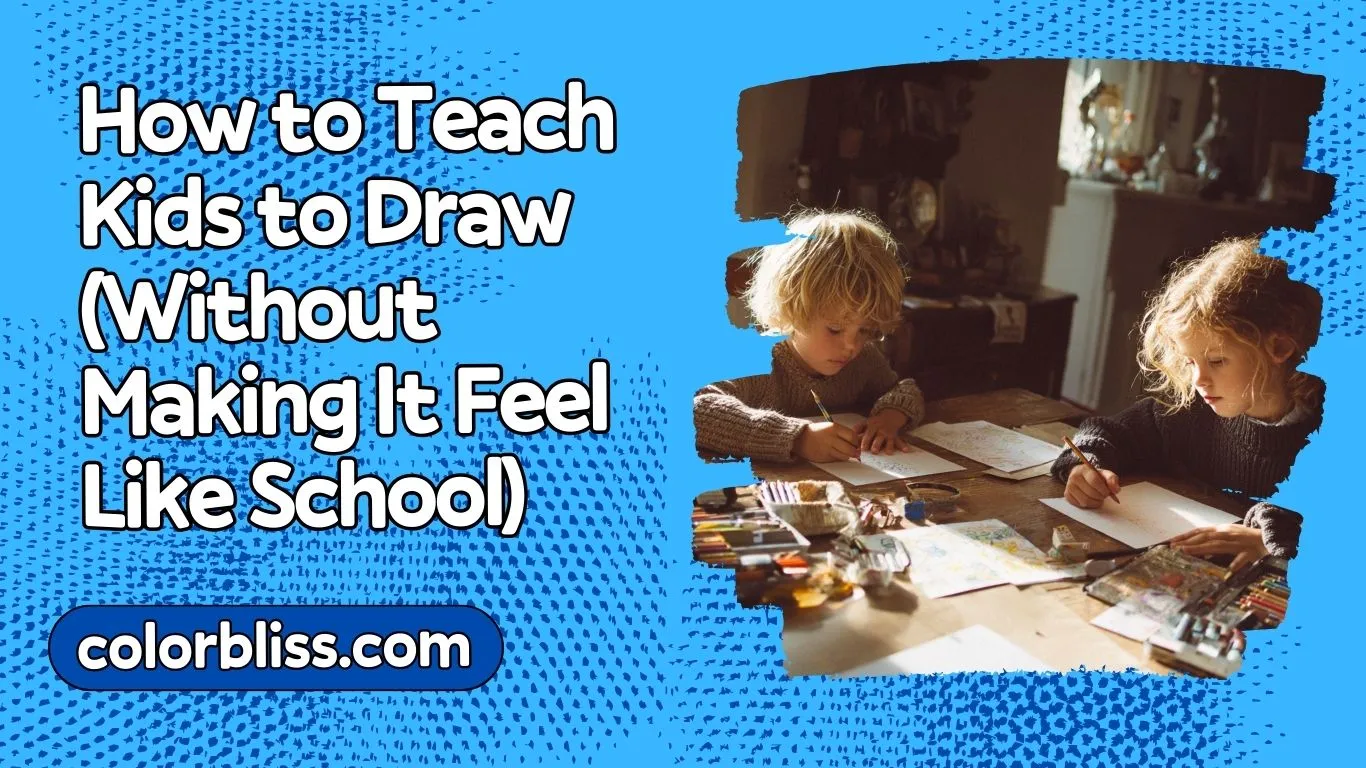
Most kids love to draw. Hand a 3-year-old a crayon and watch them go wild. But somewhere along the way, many kids stop. They decide they’re “not good at art” and quit.
That doesn’t have to happen. Teaching kids to draw isn’t about making them into artists. It’s about keeping their love of creating alive and giving them real skills.
Whether you’re a parent, teacher, or homeschool family, this guide will show you how to teach kids to draw at any age.
Why Drawing Matters
Let’s start with why drawing is worth your time.
It builds fine motor skills
Holding a pencil and making marks takes control. For young children, drawing is practice for the hand movements they’ll need for writing. A 2017 study found that motor skills in preschool helped kids do better in school later.
It teaches kids to look closely
Drawing makes kids pay attention. How many petals does that flower have? What shape is a cat’s ear? This careful looking helps with reading, science, and solving problems.
It’s a way to express feelings
Kids feel things they can’t always say. Drawing lets them show frustration, joy, or fear without words. For some kids, drawing their feelings is easier than talking.
It builds confidence
Every finished drawing proves they can make something. That feeling of “I did this” matters a lot, especially for kids who struggle in other areas.
Art Supplies That Work
You don’t need to spend a lot. But the right tools help, especially for beginners who get frustrated easily.
For ages 2-5
- Chunky crayons – Easier for small hands to hold
- Washable markers – Because messes happen
- Big drawing paper – Small paper frustrates kids who can’t control their hands yet
- A smock or old shirt – Mess is part of the deal
For ages 6-10
- Regular pencils – Good for sketching and erasing
- Colored pencils – More control than crayons
- A sketchbook – Makes their work feel important
- A good eraser – Cheap ones just smear
- Fine-tip markers – For details
For older kids and teens
- Drawing pencils (2B, 4B, 6B) – For learning to shade
- Blending stumps – For smooth shading
- Good drawing paper – Holds up to erasing
- Watercolor set – A good next step after pencils
You can find all this at any craft store. Skip the fancy stuff until they’re ready.
The Golden Rule: Focus on the Process
This is the biggest mindset shift for adults.
Kids don’t care if their drawing looks “right.” A 4-year-old isn’t upset that their horse has six legs. They’re proud of it. The upset comes when adults correct them.
Here’s what to do instead:
Ask questions, don’t judge. Instead of “That’s nice,” try “Tell me about your drawing” or “What’s happening here?”
Praise the work, not talent. Say “You really worked hard on that” instead of “You’re so talented.” Kids praised for effort try harder. Kids praised for talent get scared to fail.
Don’t fix their choices. Green sky? Purple grass? That’s fine. Fixing it tells them there’s only one right way to make art.
Draw with them. You don’t have to be good. Just showing that adults draw too makes it normal.
Step by Step Drawing: Basic Skills
Once a kid likes drawing, you can teach some basics. Keep it light. These are tools, not rules.
Start with shapes
Every object is made of simple shapes. A cat? Circles and triangles. A car? Rectangles and circles. A person? Ovals and lines.
Try this: Draw a circle. Challenge them to turn it into five things. A sun. A face. A pizza. A clock. A basketball. This shows them that drawing starts simple.
Teach them to look
Most kids draw what they think things look like, not what they actually look like. That’s why every kid draws the same house with a triangle roof.
To fix this, try drawing from real life. Put an apple on the table. Ask them to draw it while looking at it. Ask questions: “Is the apple perfectly round? What shape is the stem?”
Try blind drawing too. Have them draw something without looking at the paper. Eyes on the object, pencil on the paper, no peeking. The results are funny, but it trains their eyes and hands to work together.
Use step by step tutorials
For kids who get stuck, step by step drawing tutorials help a lot. YouTube has tons of follow along drawing lessons.
Good channels for kids:
- Art for Kids Hub – A dad and his kids draw together
- Draw So Cute – Simple cute drawings
- Let’s Draw Kids – Easy tutorials for beginners
The point isn’t to copy forever. It’s to learn how to draw basic things. Then they can change them and draw from their head.
Fun Drawing Games
Drawing lessons don’t have to feel like lessons. Games make it fun.
Mystery shape drawing
Draw a random squiggle. Challenge them to turn it into something real. A loop becomes a balloon. A zigzag becomes mountains.
Drawing prompts jar
Write fun drawing ideas on paper slips: “a robot eating pizza,” “a cat in a hat,” “your dream treehouse.” Put them in a jar. When it’s art time, pick one. This fixes “I don’t know what to draw.”
Exquisite corpse
Fold paper into thirds. One person draws a head, folds it, passes it on. Next person draws the body. Last person draws the legs. Unfold for a silly creature.
Doodle races
Set a timer for 60 seconds. Say “draw as many faces as you can.” Or trees. Or cars. Speed kills perfectionism.
Copy an artist
Find a simple artwork and have them copy it. A Matisse cutout. A Keith Haring figure. It’s not about making an exact copy. It’s about seeing how artists work.
What Works at Each Age
What works for a 4-year-old won’t work for a 12-year-old.
Ages 2-4
Kids are just exploring marks. Don’t expect real pictures yet.
Try: Free drawing, finger painting, chalk outside, drawing to music
Ages 4-6
Kids start making shapes and figures. People with big heads and stick legs.
Try: Drawing prompts, shape-based drawing, simple follow along tutorials
Ages 6-9
Kids develop their own way of drawing things. Every house looks the same. That’s normal.
Try: Step by step tutorials, drawing real objects, comic strips, art projects
Ages 9-12
Kids notice their drawings don’t look “real” and get frustrated. Many quit here.
Try: Shading practice, proportion lessons, drawing from photos, more advanced tutorials
Ages 12+
Older kids want to draw realistically or find their own style. Both are good.
Try: Figure drawing, digital art apps, studying artists they like
When Kids Say “I Can’t Draw”
Almost every kid says this at some point. Usually around age 8-10.
Here’s how to help:
Listen first. Say “It’s hard when things don’t turn out how you wanted” instead of “Of course you can draw!”
Change the words. “You can’t draw it yet” or “You can’t draw it that way yet, but you can draw it your way.”
Make it smaller. If they’re stuck on something hard, break it down. “Let’s just draw the head” or “Start with one part.”
Show your own mistakes. Draw something and point out what’s hard. “See how my circle isn’t perfect? That’s okay.”
Try something different. Some kids hate realistic drawing but love cartoons, patterns, or doodling. There’s more than one way to be an artist.
Drawing + Other Subjects
Drawing connects to lots of other learning.
Writing
Have kids draw before they write. The pictures help them plan. For kids who hate writing, “draw it first, then tell me about it” often helps.
Science
Nature journals work great. Draw plants, bugs, weather, or the moon. Drawing makes them look closer than just watching.
History
Draw scenes from history. Make illustrated timelines. Design flags.
Math
Drawing uses shapes and proportions. Ask “What shapes make up this building?” or “How would you split this in four equal parts?”
Setting Up a Drawing Space
You don’t need an art room. But a regular spot helps.
Make supplies easy to grab. If they’re buried in a closet, drawing won’t happen.
Accept mess. Use newspaper or a tablecloth. Keep a smock handy.
Get good light. Near a window is best.
Show their work. A corkboard or clips on a string shows that their art matters.
Beyond Drawing
Drawing opens doors to other art.
Painting – Watercolor is an easy next step.
Digital art – Apps like Procreate let kids draw on tablets. The undo button makes it less scary.
Mixed media – Combine drawing with collage or photos.
Line art for coloring – Kids can make their own coloring pages. Tools like ColorBliss’s line art converter can turn photos or drawings into coloring pages too.
Mistakes to Avoid
A few things that backfire:
Pushing too hard. If they’re not in the mood, try again later.
Fixing too much. Every fix says their instincts are wrong.
Comparing kids. “Look how nicely your sister drew hers” kills confidence.
Only valuing realistic art. Cartoons, patterns, and doodles count too.
Making it about you. It’s their creative time, not yours.
The Long Game
Teaching kids to draw takes time. The goal isn’t perfect drawings next week. It’s raising a person who knows they can create whenever they want.
Some kids will become serious artists. Most won’t. But every kid benefits from being able to express themselves, solve problems creatively, and look at the world with curious eyes.
Keep it fun. Keep it low-pressure. Keep showing up with paper and pencils. The rest follows.