Custom Coloring Book Printing: How To Create, Format, And Print A Book People Will Actually Use In 2026

Custom coloring book printing sounds simple until you realize one weak choice, thin paper, muddy lines, the wrong binding, can make a whole book frustrating to use. That’s the part many first-time creators miss.
If you’re making a book for a classroom, Etsy shop, church event, therapy practice, or your own family, the goal isn’t just to print pages. It’s to create a book that feels good in someone’s hands and works with crayons, pencils, or markers without constant annoyance.
This guide walks you through the practical decisions that matter most, from planning and file setup to picking the right printer.
Key Takeaways
- Custom coloring book printing requires careful planning of purpose, audience, and page count to create a functional and appealing product.
- Choosing the right paper weight and binding type significantly improves the user experience and durability of your custom coloring book.
- Use clear, high-resolution black line art at 300 DPI to ensure crisp, printable pages that work well with various coloring tools.
- Prepare print-ready files with correct bleed, CMYK colors, and clear page naming to avoid printing delays and errors.
- Evaluate your printing options—home, local shop, or online printer—based on your print quantity, budget, and desired quality for the best results.
- Narrowing your theme and audience focus leads to a more cohesive and marketable custom coloring book product.
Who Custom Coloring Books Are Best For
Custom coloring book printing works best for people who need something specific, usable, and repeatable, not just a stack of random pages. That includes parents, teachers, artists, small businesses, therapists, and nonprofits.
Here’s who benefits most:
- Children’s products with simple art and sturdier paper, which means kids can color with less tearing and fewer bleed-through issues.
- Adult coloring books with more detailed designs and nicer covers, which means the book feels gift-worthy and better suited to mindfulness or hobby use.
- Brands, churches, and nonprofits adding logos, lessons, or messages, which means the book can teach or promote without feeling like an ad.
- Artists and creators selling themed books, which means you can turn a niche idea into a real product instead of posting free printables forever.
If you’re creating one-off gifts or fast classroom packets, a simpler workflow may be enough. If you want a polished product people will keep, custom coloring book printing is the better fit.
You can also speed up idea testing with an ai coloring workflow or build themed coloring pages before committing to a full print run.
Do this today: write one sentence that defines your reader and use case. Take 5 minutes. If you can’t name who the book is for, don’t design page one yet.
Plan Your Book Before You Design A Single Page
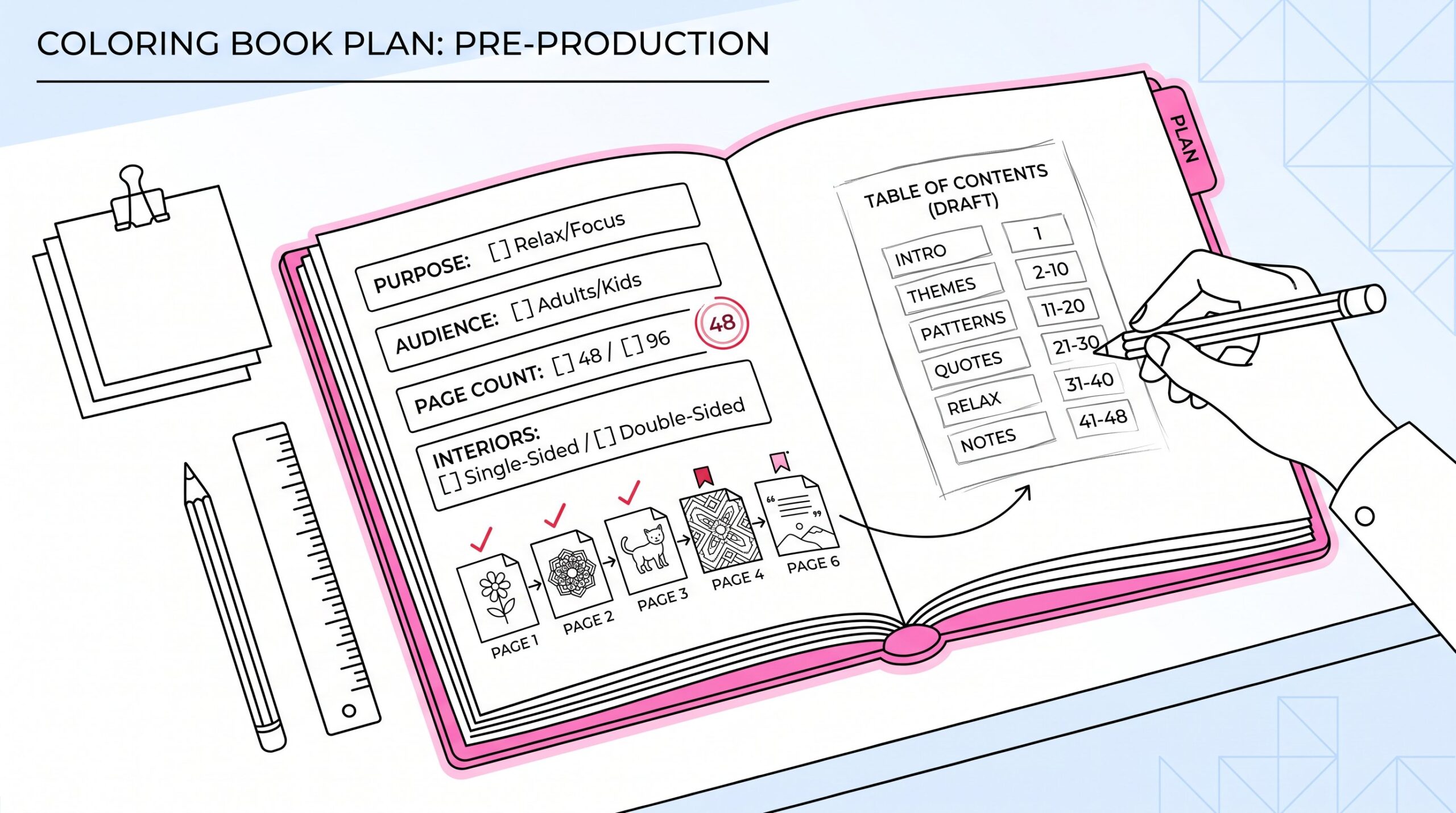
Most custom coloring book printing problems start before the artwork does. People jump into design, then discover their page count doesn’t match the binding, their audience wants thicker paper, or their budget only supports a smaller trim size.
Start with four decisions:
- Purpose: gift, retail product, classroom tool, fundraiser, or promo item, which means every later choice gets easier.
- Audience: young kids, older students, adults, or mixed ages, which means you can match line complexity and paper needs.
- Page count: usually 24 to 100 pages, with 30 to 50 pages a common sweet spot, which means the book feels substantial without becoming expensive.
- Single- or double-sided interiors: which means you control cost, marker bleed-through, and whether pages can be removed.
For many creators, planning the sequence matters too. A random set of pages feels disposable. A book with a clear arc, easy to detailed, seasonal to seasonal, lesson one to lesson ten, feels intentional.
If you want a shortcut, a coloring page generator can help you test themes fast before you pay for printing.
Start by sketching a rough table of contents. Give yourself 15 minutes and list every page in order.
Choose A Clear Theme, Audience, And Page Count
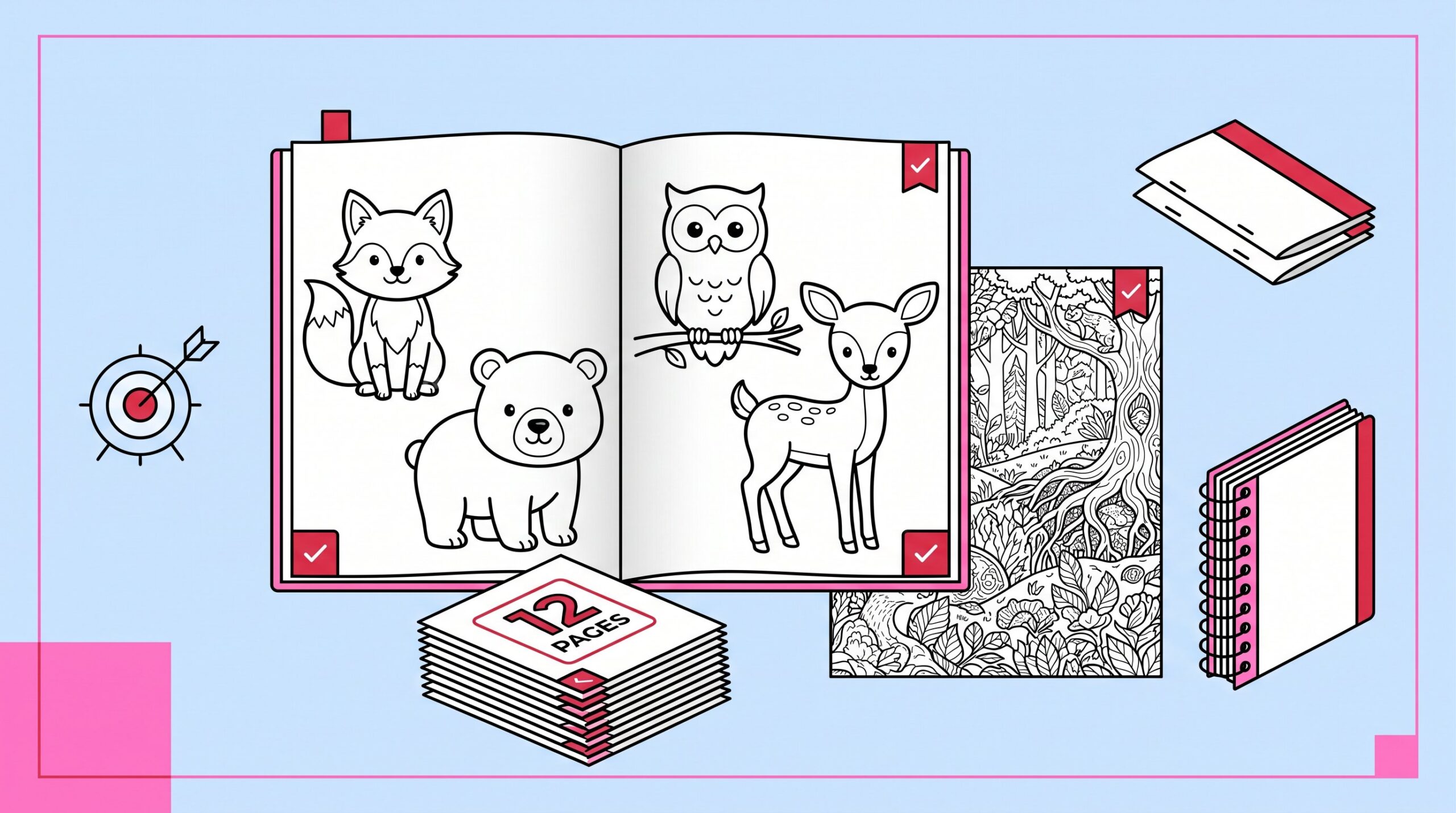
Specific beats generic almost every time in custom coloring book printing. “Animals” is broad. “Woodland animals for preschool scissor-and-color stations” is much easier to design and sell.
A clear theme helps with:
- Visual consistency, which means the book looks like one product instead of a folder dump.
- Marketing clarity, which means parents, teachers, or buyers know immediately whether it fits them.
- Better page planning, which means fewer filler pages at the end.
Match the art style to the audience. Kids usually need bold outlines, larger spaces, and simpler shapes. Adults often want denser patterns, scenic pages, or calming motifs.
Then match page count to binding. Under about 48 pages, saddle stitch often works well, which means lower cost and a lighter booklet feel. Above that, perfect binding or spiral binding tends to make more sense, which means the book holds together better or lies flatter.
If you’re building from family photos, local landmarks, or student ideas, a photo to coloring page workflow can make the theme feel personal fast.
Try this today: pick one narrow theme and one age group. Spend 10 minutes cutting any page ideas that don’t fit both.
Decide On Book Size, Paper, And Binding Early
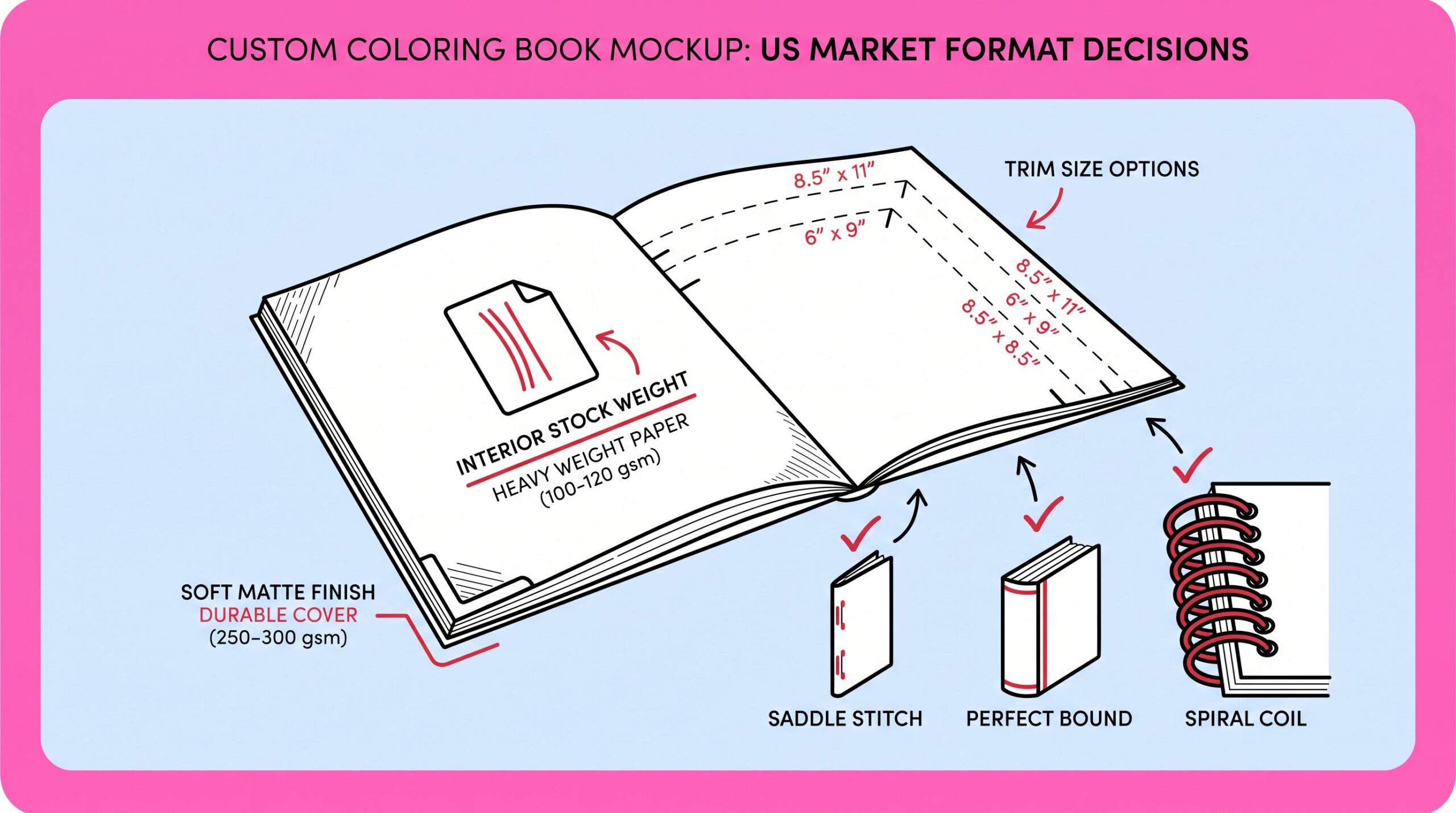
Size and materials shape the user experience more than most first-time creators expect. In custom coloring book printing, the same artwork can feel cheap or premium depending on paper and binding.
Common sizes include 8.5 x 11 inches, A4, and 6 x 9 inches. Larger pages give kids more room, which means easier coloring. Smaller books feel more portable, which means they work well for gifts, travel, or event handouts.
For interiors, use at least 60–70 lb paper or about 100 gsm, which means less show-through with crayons and pencils. If markers are likely, go heavier when possible, often around 80 lb text, which means fewer ruined back pages.
For covers, 250–300 gsm stock adds stiffness, which means the book survives backpacks, shelves, and repeated use better. A matte finish is usually best for coloring books, which means less glare and a more natural writing surface.
Binding matters too:
- Saddle stitch for shorter books
- Perfect binding for bookstore-style spines
- Spiral binding for lay-flat usability
ColorBliss also offers coloring pages built for print workflows, which means you can match your format before you order.
Do this today: choose one trim size, one paper weight, and one binding. Give yourself 20 minutes and stop comparing after that.
Create Printable Coloring Pages That Look Clean And Color Well
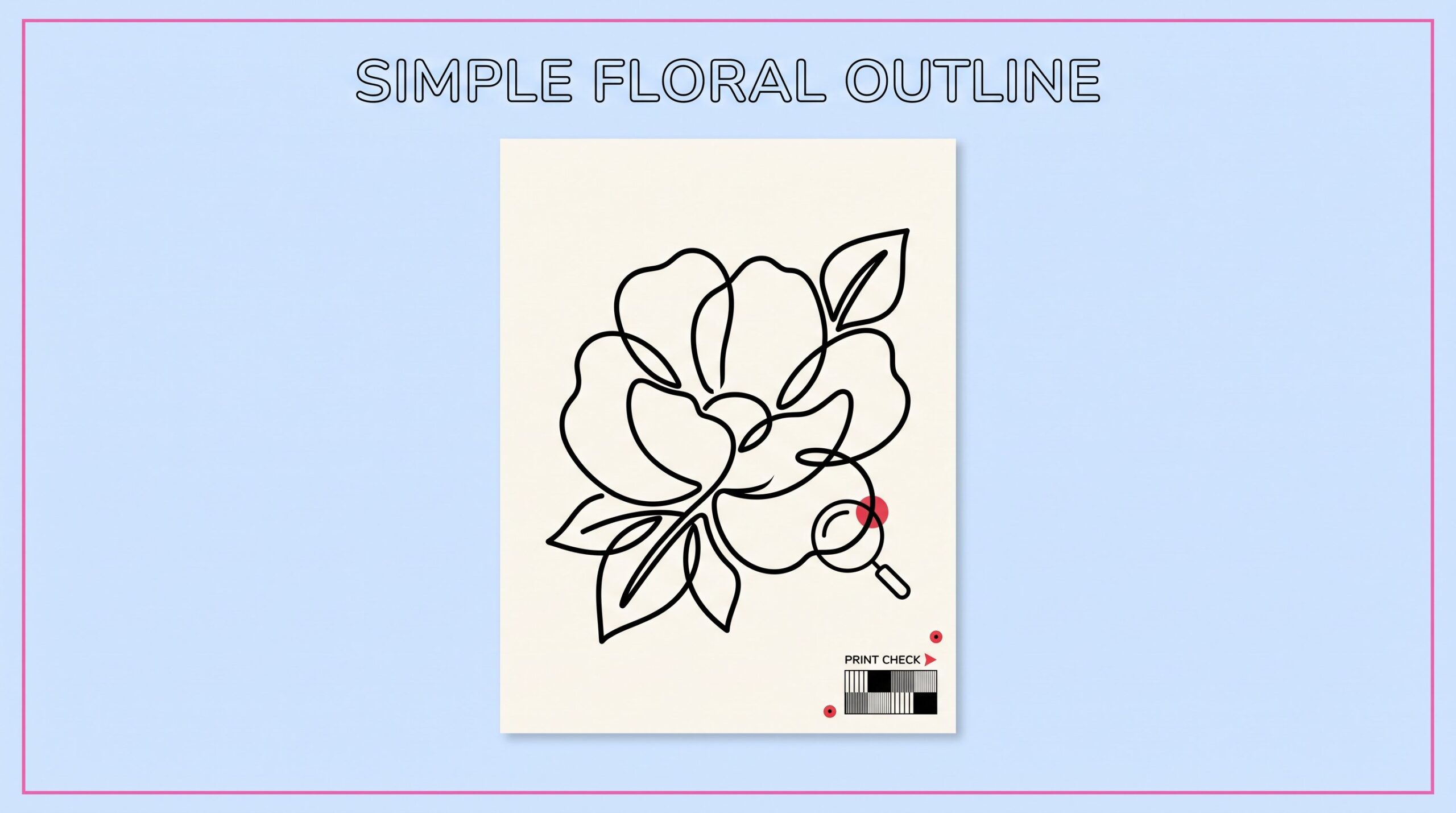
Good custom coloring book printing depends on clean source art. If the lines are fuzzy on screen, they’ll look worse on paper.
Use 300 DPI artwork, which means lines stay crisp at print size. Keep line art solid black with strong contrast, which means colorers can easily see shapes and stay inside forms if they want to.
A few practical rules help a lot:
- Put one main image per page, which means the page feels complete and not cramped.
- Avoid gray, textured, or watercolor-like outlines, which means printers won’t soften details into mush.
- Leave enough white space around detailed areas, which means coloring feels relaxing instead of crowded.
- Add simple titles, prompts, or puzzles only if they support the theme, which means the page still reads as a coloring page first.
Interior pages should usually stay black and white or grayscale, which means printing costs stay lower and the pages remain easy to color. Covers should be prepared in CMYK color, which means printed hues will be closer to what you expect.
If your files started small, bulk upscale tools can improve print readiness, and Google Scholar is useful if you’re building therapeutic or classroom books around evidence-informed activities.
Start by printing one test page at home today. Take 10 minutes and check line sharpness from arm’s length.
Prepare Your Files For Professional Printing
This is where custom coloring book printing either goes smoothly or becomes a headache-filled email thread. Printers want organized, predictable files.
Export a print-ready PDF at the final trim size with proper bleed, often 0.125 inches, which means artwork that touches the edge won’t leave white slivers after trimming. Keep the cover separate if your printer asks for it, which means fewer setup errors.
Use this checklist:
- CMYK for color files, which means better print color accuracy.
- Flatten fonts or outline text, which means no weird font substitutions.
- Name pages clearly like Page_01, Page_02, which means easier proofing and fewer order mistakes.
- Check margins and safe zones, which means important details won’t get cut off.
- Request a proof, which means you can catch opacity, alignment, and line quality issues before the full run.
If you’re planning marketplace sales, a KDP-ready setup can save time, and PubMed is useful when your coloring book includes wellness or therapy-adjacent claims that should be grounded in published research.
Try this today: export one final PDF and review it at 200% zoom. Set aside 15 minutes and look for cut-off text, weak lines, and page order errors.
Compare Printing Options: Home, Local Shop, Or Online Printer
There isn’t one best custom coloring book printing option. The right choice depends on quantity, quality expectations, and how much control you want.
Home printing is best for tiny runs, prototypes, or classroom packets, which means you can test quickly. It’s not ideal for polished products, because per-page cost climbs fast and paper options are limited.
Local print shops work well when you want fast turnaround and in-person proofing, which means you can hold samples before committing. They’re especially useful for school events, church groups, and community programs.
Online printers or print-on-demand services make sense for larger runs or broader selling, which means you get more binding, paper, and shipping options. Digital printing is often best for short runs. Offset printing starts to make more sense around 500+ copies, which means your unit cost can drop if volume is high.
Use this quick filter:
- Use home printing for under 20 copies.
- Use a local shop for 20–200 copies with hands-on support.
- Use online printers for specialized formats or repeat orders.
If you’re still shaping the book itself, a make-your-own book workflow helps before you price printers.
The best printer is the one that matches your audience, tools, and budget, not the fanciest option on paper.
Do this today: get three quotes for the same specs. Give yourself 30 minutes, compare paper, binding, proofing, and shipping, then choose the simplest option that meets your real use case.
Common Questions About Custom Coloring Book Printing
What are the key steps to plan a custom coloring book before designing pages?
Start by defining your book’s purpose, audience, page count, and whether pages are single- or double-sided. Planning these helps match design, paper, and binding choices for a smooth printing process.
Which paper weight is best for custom coloring books to prevent bleed-through?
Use interior paper of at least 60–70 lb (about 100 gsm) for crayons and pencils. For markers, heavier paper around 80 lb text reduces bleed-through and preserves page quality.
How do I choose the right binding type for my custom coloring book?
For books under about 48 pages, saddle stitch binding is cost-effective and lightweight. For more pages, perfect binding or spiral binding provides durability and easier page handling.
Can I create personalized coloring books from family photos or special themes?
Yes, using a photo to coloring page workflow, you can quickly turn personal images or local themes into customized coloring books that feel meaningful and unique.
What printing options are available for custom coloring books and when should I use each?
Home printing suits tiny runs or prototypes. Local print shops offer fast turnarounds and proofing for medium volumes. Online printers and print-on-demand services are ideal for larger or repeat orders with varied formats.
Why is exporting a print-ready PDF important for custom coloring book printing?
A print-ready PDF with correct trim size and bleed ensures artwork avoids white edges after trimming. Using CMYK color, flattening fonts, and clearly naming pages minimizes printing errors and speeds up proofs.